
Procedure and method for applying for a foreigner registration card in Korea
Understanding the Foreigner Registration Card
For any individual planning to stay in South Korea for an extended period, the Foreigner Registration Card, often referred to as the ARC (Alien Registration Card), serves as the most essential document. It functions as your primary identification card within the country. Much like a Korean resident’s national ID card, the ARC contains your personal information, your visa status, and your period of stay. It is the key that unlocks access to basic services that are otherwise difficult or impossible to obtain as a temporary visitor.
The importance of this card cannot be overstated. Without an ARC, you are essentially a visitor in the eyes of the government and local institutions. While your passport is a valid form of identification for international travel and banking in some specific cases, the ARC is the standard requirement for opening bank accounts, signing up for mobile phone plans, accessing the national health insurance system, and even verifying your identity on various Korean websites and apps. It is legally required for any foreigner staying in Korea for more than 90 days. Failure to register within the designated timeframe can result in significant fines and legal complications.
Eligibility and Legal Requirements
Not every foreigner in South Korea needs an ARC. If you are entering the country on a short-term visa, such as a tourist visa (B-1, B-2) or a short-term general visa (C-3), you are generally not eligible and not required to apply for one. The registration process is strictly for those who hold long-term visas, which are typically those valid for stays of 91 days or longer. These include D-type visas for students, E-type visas for workers, F-type visas for residents or spouses of Korean citizens, and H-type visas for working holidays.
The legal obligation to register is stipulated under the Immigration Act. According to this law, if you intend to stay in Korea for more than 90 days, you must apply for foreigner registration at the local immigration office having jurisdiction over your place of residence within 90 days of your entry into the country. It is highly recommended to start this process as soon as you settle into your accommodation, as immigration offices are often busy and require advance appointments.
Step by Step Application Procedure
Navigating the bureaucratic process of the Korea Immigration Service can seem intimidating, but if you break it down into manageable steps, it becomes quite straightforward. The process involves preparation, scheduling, and the actual visit to the immigration office.
Step One Preparing Your Documents
Before you even think about booking an appointment, you must gather all the necessary paperwork. Incomplete applications are the number one cause of rejection or delays. While requirements can vary slightly depending on your specific visa type, the core documents are almost always the same:
- Application for Registration form (available at the office or online via the HiKorea website).
- Valid passport with your visa stamp.
- One passport-sized color photograph taken within the last six months (3.5cm x 4.5cm).
- Proof of residence (this could be a housing contract, a confirmation of residence provided by your university, or a letter from your host if you are staying with someone).
- The application fee, which is usually around 30,000 KRW.
- Visa-specific supporting documents, such as a Certificate of Admission for students or a Certificate of Employment for workers.
Step Two Scheduling an Appointment
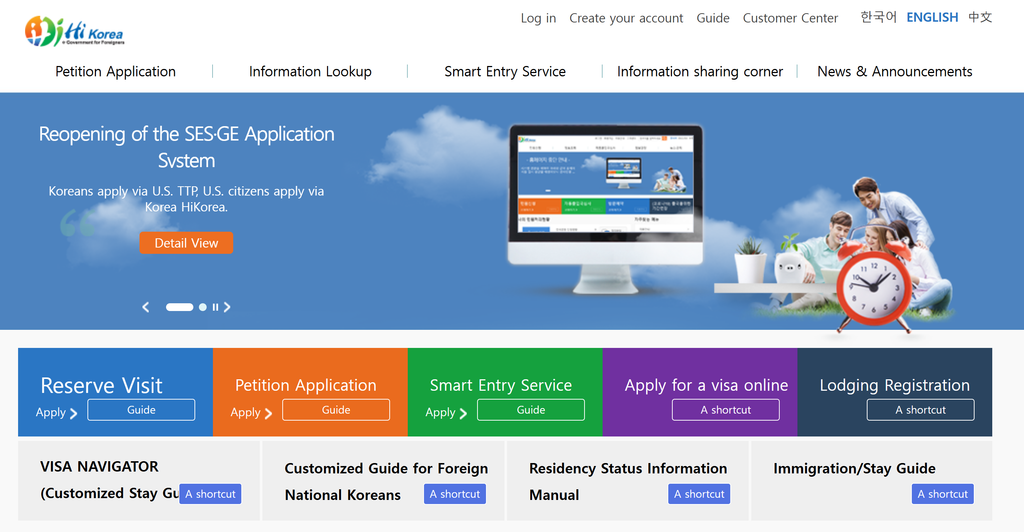
Gone are the days when you could simply walk into an immigration office and wait in line for hours. Today, the HiKorea website is the mandatory portal for scheduling appointments. You must register an account on the HiKorea website and navigate to the reservation section. During peak seasons, such as the beginning of a semester for universities, slots fill up very quickly. It is advisable to check the website as soon as you arrive in Korea to secure a spot within your 90-day window.
Step Three Visiting the Immigration Office
On the day of your appointment, arrive at least 15 minutes early. Bring your printed appointment confirmation and all your physical documents. When you arrive, you will take a number and wait for your turn. When your number is called, you will submit your documents to the officer. They will review everything, and if everything is in order, they will guide you to a separate station for biometric data collection, which involves taking your fingerprints. Once this is done, you will pay the fee, and you will be given a receipt that serves as your temporary ID until the card is manufactured and mailed to you.
Practical Applications in Daily Life
Once you receive your ARC, your life in Korea will become significantly easier. Many services that were previously blocked to you will suddenly become available. Understanding how to use your card effectively is key to integrating into Korean society.
Opening a Bank Account
Attempting to open a bank account with just a passport is often met with strict scrutiny and sometimes outright refusal due to anti-money laundering regulations. With an ARC, the process is standard. You can walk into any major bank like KB Kookmin, Shinhan, or Woori, and open a savings account. This is essential for receiving your salary or managing your living expenses.
Mobile Phone Subscriptions
Mobile phone carriers in Korea require identity verification to sign up for a plan. If you are using a prepaid SIM card intended for tourists, you often lack the ability to use mobile authentication services. Once you have an ARC, you can sign up for a monthly contract, which is generally much cheaper and offers better data plans. More importantly, it allows you to pass the identity verification process required by almost every major Korean app.
Online Shopping and Identity Verification
If you have ever tried to sign up for services like Coupang, Gmarket, or even food delivery apps, you might have noticed the identity verification step (often called i-PIN or mobile authentication). This system is linked directly to your legal identity in Korea. Once you have an ARC, you can register your phone number through your mobile carrier as a verified user, which then allows you to complete these identity checks online.
Common Misconceptions and Facts
There are many myths surrounding the ARC process that often lead to unnecessary anxiety among foreigners. Clearing these up will help you approach the process with confidence.
Myth One You Can Use Your ARC for Travel
A common misconception is that the ARC replaces your passport for international travel. This is false. Your ARC is only valid for identification within the borders of South Korea. When you leave Korea, you must carry your passport. If you lose your ARC while abroad, you will have to undergo a complex process to re-enter or replace it, so treat it with the same care as your passport.
Myth Two The ARC Never Expires
Many people assume that once they get their card, they are set for the duration of their stay. However, the ARC is tied to your visa. If your visa expires, your ARC effectively expires as well, even if the date printed on the card shows a later time. You must keep track of your visa expiration date and apply for extensions at the immigration office before that date arrives.
Myth Three You Do Not Need to Report Changes
If you change your address, your passport number, or your name, you are legally obligated to report these changes to the immigration office within 14 days. Failure to report a change of address can result in a fine. This is a simple process that can often be done online or at a local community center, but it is frequently overlooked by many foreigners.
Expert Advice for a Smooth Experience
Having helped many foreigners navigate the Korean immigration system, experts often emphasize the importance of preparation and patience. The Korean immigration system is highly efficient, but it is also very rigid. There is little room for flexibility if you miss a document or fail to meet a deadline.
One piece of advice that cannot be repeated enough is to always carry a copy of your passport and your ARC with you, or at least have a clear photo of them on your phone. While you are not legally required to carry your physical card at all times, having a digital copy can be a lifesaver if you are ever asked to prove your identity by authorities. Furthermore, always check the HiKorea website for any updates to policies or procedures before you go, as rules regarding visa types and application requirements can change with little notice.
Another expert tip is to be proactive about your visa extensions. Never wait until the last day of your visa validity to apply for an extension. The immigration system is prone to technical issues, and appointment slots can be fully booked for weeks in advance. Aim to handle your affairs at least one month before any expiration date to give yourself a buffer for unexpected problems.
Frequently Asked Questions
What should I do if I lose my Foreigner Registration Card?
If you lose your card, you must report the loss to the local immigration office within 14 days of discovering it is missing. You will need to apply for a re-issuance of the card. This involves paying a re-issuance fee and providing a new photo. Do not delay this, as being unable to produce your ID when requested can lead to administrative difficulties.
Can I travel outside of Korea while waiting for my ARC?
It is generally not recommended to travel outside of Korea while your first-time registration is being processed. Because your visa status is being finalized, leaving the country can sometimes lead to complications with your entry or the cancellation of your application. If you absolutely must travel, consult with an immigration officer at the office where you submitted your application before leaving.
Do I need to pay for National Health Insurance?
Yes. Once you have an ARC, you are automatically enrolled in the Korean National Health Insurance Service (NHIS). You will receive a bill at your registered address. It is crucial to pay these premiums on time, as unpaid health insurance premiums can cause significant issues when you eventually try to extend your visa or change your visa status in the future.
Can I use my ARC to vote in Korean elections?
Generally, foreigners are not permitted to vote in national elections in South Korea, regardless of whether they hold an ARC or have been a resident for many years. There are very limited exceptions for long-term permanent residents in certain local elections, but for the vast majority of visa holders, voting rights are not granted.
Cost Effective Utilization Methods
Applying for an ARC involves several costs, including the application fee, the cost of photos, and potentially transport to the immigration office. To be cost-effective, you should prepare your own high-quality digital photo that meets the requirements and print it at a local convenience store or photo shop for a fraction of the cost of a professional studio session. Always double-check the exact dimensions required on the HiKorea website to avoid having your photo rejected.
Additionally, utilize the online services on the HiKorea website whenever possible. Many tasks, such as reporting a change of address, do not require a visit to the immigration office. By handling these tasks online, you save on transportation costs and, more importantly, your valuable time. If you live in a rural area, check if there is a local branch office, as they are often less crowded than the main regional immigration offices and can save you a long trip to a major city.
Understanding the Different Categories of ARC
It is helpful to understand that the ARC you receive is a reflection of your specific visa category. The card will clearly state your status, such as D-2 for students, E-2 for English teachers, or F-6 for marriage migrants. This status determines your rights and limitations within the country. For example, a student on a D-2 visa is restricted in the number of hours they can work per week, whereas a professional on an E-7 visa may have different conditions attached to their employment.
Your ARC is not just an ID card; it is a summary of your legal standing. Whenever you interact with government offices, they will look at this code to understand what you are allowed to do. Always keep a copy of your visa approval notice if you have one, as it provides additional context that might be useful during official interactions.
The Role of the Immigration Office
The Korea Immigration Service operates a network of offices across the country. Each office is responsible for a specific jurisdiction. You must visit the office that covers the district where your residence is registered. If you move to a different city, you may need to register your new address with the office in that jurisdiction. The immigration officers are there to ensure compliance with the law, but they are also there to assist you. If you are confused about a requirement, do not hesitate to ask them for clarification. While language barriers can sometimes be an issue, most major immigration offices have staff who can assist in English or provide translation services.
Managing Your Stay and Status
Maintaining your status in Korea is a continuous process. Your ARC is the anchor for your stay, but your actions determine your eligibility to keep that status. Always keep your contact information updated. If your phone number changes, update it with your bank and the immigration office. If you change your employment, you must report this change, as your ARC is often tied to your specific employer or institution. Staying informed about the latest immigration policies is the best way to ensure that your time in Korea remains stress-free and productive.
For those who plan to stay in Korea for many years, the ARC is the first step toward potential permanent residency. Many visa pathways require a record of continuous residence, and your ARC history is the proof of that residency. By keeping your records clean, paying your taxes and insurance premiums, and following the rules, you build a positive history that will make future applications for visas or permanent residency much smoother.
Final Tips for Success
When you head to the immigration office, bring a pen, a folder for your documents, and a book or something to keep you occupied while you wait. The process is a marathon, not a sprint. Be polite and respectful to the staff, as they deal with thousands of applicants every day. Your attitude can go a long way in making the interaction pleasant for both sides. If there is a missing document, ask if you can email it or upload it later; sometimes, officers are willing to work with you if you show that you are making a genuine effort to comply.
Remember that the ARC is your gateway to a smoother life in Korea. It bridges the gap between being a transient visitor and a recognized resident. Embrace the process, stay organized, and you will find that the benefits of having your registration card far outweigh the effort required to obtain it. Whether you are in Korea for study, work, or family, the ARC is your companion for all the experiences that await you in this vibrant country.
Master






댓글 0
첫 댓글을 남겨보세요.