
Let’s explore everything from public transportation to shopping with the Korea Travel Card
Understanding the Korea Travel Card
Traveling to South Korea is an exhilarating experience, blending ancient traditions with futuristic technology. Among the many logistical hurdles a traveler faces, the most immediate one is how to move around and make small purchases without carrying bulky wads of cash. Enter the Korea Travel Card, a multifaceted solution designed specifically for international visitors. This is not just a transit pass; it is a digital wallet, a shopping companion, and a key to navigating the country like a local.
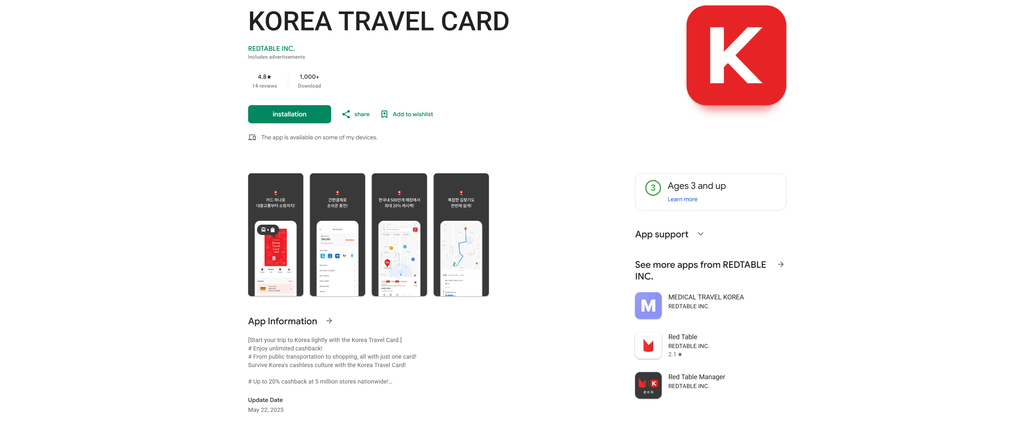
At its core, the Korea Travel Card functions as a rechargeable prepaid card. It is widely accepted across various public transportation networks, including subways, buses, and taxis, and it serves as a convenient payment method at convenience stores, cafes, and even some automated kiosks. By consolidating your travel and payment needs into one plastic card or mobile app, you eliminate the constant stress of counting coins or worrying about currency exchange rates at every small purchase.
Why You Need a Travel Card in Korea
The primary importance of a travel card lies in its seamless integration with Korea’s highly efficient public transportation system. While you can pay for subway rides with single-journey tickets, these require a refundable deposit and a tedious process of buying a new ticket for every single trip. With a travel card, you simply tap your card on the reader at the entry and exit gates. The system automatically calculates the fare based on the distance traveled and any applicable transfer discounts.
Beyond transit, Korea is a society that has largely moved toward cashless transactions. Even in small convenience stores like 7-Eleven, GS25, or CU, which are omnipresent in Korean cities, using a card is the standard. Carrying a travel card means you do not have to worry about the exact change when buying a bottle of water or a quick snack. It streamlines your daily routine, allowing you to focus on sightseeing rather than managing your wallet.
Types of Travel Cards Available
While the term Korea Travel Card is often used as a catch-all, there are several specific products that serve this purpose. Understanding the differences is crucial to choosing the one that best fits your travel style.
Tmoney Card
The Tmoney card is the most iconic and widely used transportation card in South Korea. It is the gold standard for public transit and is accepted in virtually every city. You can buy it at convenience stores, subway stations, and even at the airport. It is incredibly durable and can be kept as a souvenir after your trip. Because it is so ubiquitous, it is the safest bet for any traveler.
Namane Card
The Namane card is a more modern, customizable option. It allows users to put their own photos on the card, making it a personalized souvenir. It functions similarly to Tmoney but often comes with an integrated app that allows you to manage your balance more effectively from your smartphone. This is an excellent choice for travelers who value personalization and digital convenience.
WOWPASS
The WOWPASS has gained immense popularity recently because it acts as a hybrid card. It is a prepaid card that can be loaded with foreign currency at kiosks located throughout the country. It functions as both a transportation card (via an embedded Tmoney chip) and a debit card that can be used at most shops and restaurants. This eliminates the need to visit traditional currency exchange booths, as you can load it directly from your home currency.
Practical Applications for Daily Life
Once you have your card, you will quickly discover how it integrates into your daily life. Let us look at how you can use these cards to maximize efficiency.
- Public Transportation: Tap-in and tap-out at subway turnstiles. The same card works on buses—just remember to tap when you board and when you exit to ensure you get the correct fare and transfer discounts.
- Convenience Store Purchases: Almost every convenience store in Korea accepts these cards. You can buy snacks, drinks, toiletries, and even small electronics.
- Taxi Payments: Most taxis in major cities like Seoul and Busan are equipped with card readers. You can pay your fare using your Tmoney or linked travel card, which is much easier than explaining your destination and dealing with cash.
- Vending Machines and Lockers: Many public lockers in subway stations and some modern vending machines accept these cards, making it easy to store your luggage or grab a coffee on the go.
Cost Effective Utilization Methods
Traveling on a budget requires smart planning. Here are some strategies to make your travel card work harder for your wallet.
Mastering the Transfer Discount
The Korean public transport system offers a significant benefit: free or discounted transfers. If you transfer from a subway to a bus, or from one bus to another within a specific time frame (usually 30 minutes, or up to 60 minutes late at night), you do not have to pay the base fare again. You only pay for the additional distance. This can save you a substantial amount of money over a week of heavy sightseeing.
Choosing the Right Loading Strategy
Avoid loading too much money at once. Since these cards are not always easily refundable at the end of your trip (especially if you have a significant balance remaining), it is better to load smaller amounts—perhaps 20,000 to 30,000 KRW at a time. This keeps your risk low and ensures you don’t leave the country with a large amount of trapped cash on a plastic card.
Utilizing Kiosk Features
If you use a card like the WOWPASS, look for kiosks that offer special promotions. Sometimes, these kiosks offer better exchange rates than airport booths or banks. By checking the current rates on the app before you load your card, you can ensure you are getting the best value for your money.
Common Misconceptions and Facts
There is a lot of misinformation circulating online regarding travel cards in Korea. Let us clear up the most common points of confusion.
Misconception: You need a Korean bank account to use a travel card
Fact: Most travel cards like Tmoney, Namane, and WOWPASS are prepaid. They do not require a bank account. You load them with cash or, in some cases, via a credit card at a kiosk. They are designed specifically for tourists who do not have local financial residency.
Misconception: You can use these cards for international online shopping
Fact: These cards are generally restricted to physical, point-of-sale transactions within South Korea. They are not credit cards and cannot be used for websites like Amazon or international flight bookings.
Misconception: You must buy a new card in every city
Fact: Tmoney is national. Whether you are in Seoul, Gyeongju, Jeju, or Busan, the same Tmoney card will work. You do not need to buy a different card for different regions.
Expert Advice for a Smooth Experience
Drawing from the experiences of frequent travelers and local experts, here are some pro tips to ensure your trip is seamless.
- Keep your card in an easy-to-access pocket: You will be tapping it constantly. If you keep it in your wallet, make sure your wallet is thin enough to tap directly on the sensor. This saves you from having to pull the card out every time you enter a subway station.
- Check your balance frequently: Most subway turnstiles display your remaining balance as you exit. Keep an eye on this number. If you get below 2,000 KRW, it is time to find a convenience store or a subway kiosk to reload.
- Be aware of card expiration: While most cards last for years, some specific promotional cards might have shorter lifespans. Check the back of the card or the official website for details if you plan on coming back to Korea in the future.
- Download the transit app: Apps like Naver Map or KakaoMap are essential. They provide real-time information on bus arrivals and subway connections. When combined with your travel card, you have the ultimate navigation toolkit.
Frequently Asked Questions
Can I get a refund if I have money left on my card?
Yes, you can usually get a refund for the balance on a Tmoney card at a convenience store or a subway station, though there is often a small service fee. Note that the cost of the card itself is generally not refundable. It is often better to use the remaining balance to buy some snacks at the airport convenience store before you leave.
What happens if I lose my card?
Unlike a bank card, a standard Tmoney card is not linked to your identity. If you lose it, the money on it is effectively gone. This is another reason to avoid loading large amounts of cash onto the card at any one time. Keep it in a secure place, just like you would with your physical cash.
Can I share one card with my family?
Generally, no. Each person needs their own card. When using public transport, the system registers one tap per person. If you try to tap the same card twice for two people, the system will often throw an error or charge you a higher fare. It is best to purchase individual cards for each member of your group.
Is there a difference between the cards sold at airports and those sold in the city?
Sometimes, cards sold at airports are “tourist special” editions that may include additional perks like discount coupons for attractions or shopping malls. It is worth checking the packaging or asking the vendor if there are any current promotions associated with the card you are buying.
Navigating the Subway System
The subway system in Korea is world-class, and your travel card is the key to unlocking it. The stations are clean, safe, and incredibly well-signed, even in English. When you enter a station, look for the yellow or blue turnstiles. Tap your card on the sensor, and you will hear a pleasant chime indicating that your card has been accepted.
One detail that often trips up new travelers is the direction of the subway. Always check the final destination of the train before you pass through the gates. If you enter the wrong side, you may have to tap your card to exit and re-enter, which could potentially charge you a small fee. If you find yourself in this situation, look for the “Help” button or a station attendant; they are usually very accustomed to assisting tourists and can often reset your card status if a mistake is made.
Shopping with Your Travel Card
While the primary purpose of these cards is transit, the shopping capabilities are a hidden gem. In major tourist areas like Myeongdong or Hongdae, many smaller boutiques and souvenir shops accept Tmoney. This is particularly useful when you want to make a quick purchase without pulling out your credit card or dealing with foreign currency.
Additionally, convenience stores are the heart of Korean retail life. Whether you need a late-night snack, a rain poncho, or an extra battery, these stores have it all. Using your travel card here is faster than any other payment method. It makes you feel like a local, moving quickly through the checkout line. It is also a great way to use up any small change you might have accumulated during your trip.
Tips for Using Cards in Rural Areas
While the travel card system is comprehensive, you might find minor differences when venturing into very rural areas or small towns. In these places, some local buses might have older card readers. While 99% of the time your card will work perfectly, it is always a good idea to keep a small amount of emergency cash in your wallet just in case the system is offline or a specific bus line does not support the card.
Furthermore, in rural areas, the distance-based fare calculation can sometimes be more complex. If you are taking a long-distance intercity bus, your standard city transit card might not work. Always verify with the driver or at the ticket counter if you are unsure. For intercity travel, you will typically need to buy a specific paper ticket at the bus terminal.
The Evolution of Digital Wallets
The future of travel in Korea is moving toward mobile integration. Many travelers are now opting to use mobile-based versions of these cards. If you have an NFC-enabled smartphone, you can often download an app that turns your phone into a virtual Tmoney card. This is the pinnacle of convenience: you don’t even need to carry a plastic card anymore. You simply tap your phone on the reader.
However, be aware that this technology can sometimes be finicky for international visitors depending on the operating system of your phone and the regional settings of your app store. For most travelers, the physical card remains the most reliable and foolproof method. It never runs out of battery, it doesn’t require a data connection, and it is universally recognized by every reader in the country.
Handling Technical Issues
Occasionally, you might encounter a “read error” at a subway gate. Do not panic. This happens even to locals. The most common cause is that the card is placed too close to another contactless card in your wallet (like a credit card). The reader gets confused by the conflicting signals. To avoid this, keep your travel card in a separate slot or hold it slightly away from your wallet.
If the card still does not work, look for the station office. Every subway station has a small office near the turnstiles staffed by an attendant. They can check your card’s status, see if it is damaged, or tell you if there is an issue with your last trip record. They are generally very helpful and can resolve almost any technical hiccup you might encounter.
Maximizing Your Trip with Strategic Planning
To truly get the most out of your Korea Travel Card, think of it as a tool for spontaneous exploration. Because you have a reliable way to pay for transit, you are not tethered to your hotel or a specific tour group. You can hop on a bus that looks interesting, get off at a random stop, explore a hidden neighborhood, and jump back on another bus without ever worrying about the logistics of payment.
This freedom is the true value of the card. It removes the friction from travel. You are no longer an outsider struggling with the mechanics of the city; you are a participant in its rhythm. Whether you are grabbing a quick coffee, boarding the express train to the airport, or navigating the intricate bus lines of Seoul, your card is your constant companion.
Maintaining Card Hygiene
While these cards are sturdy, they are not invincible. Treat them with the same care as you would a credit card. Keep them away from high-heat environments, such as leaving them on a car dashboard in the sun, as this can damage the internal chip. Avoid bending the card, as this can break the antenna inside. If you have a decorative card, consider putting it in a protective sleeve to keep the design looking fresh throughout your trip.
If you are planning to visit Korea multiple times over a few years, keep your card in a safe place at home. Most Tmoney cards do not have an expiration date on the balance itself, meaning that if you have 5,000 KRW left on your card, it will likely still be there when you return two years later. Just remember to check the specific policy for the brand of card you choose, as some newer “tourist” cards may have a shelf life.
The Cultural Significance of Convenience
To understand the Korea Travel Card is to understand the Korean approach to service. The country places a high value on efficiency, speed, and user experience. The ubiquity of these cards is a reflection of a society that wants to make life easier for everyone. By using these cards, you are tapping into a system designed to respect your time.
You will notice that locals rarely fumble with their bags or wallets at the turnstiles. They have a practiced, fluid motion. As you spend more time in Korea, you will find yourself adopting this same efficiency. It is a small but satisfying part of the travel experience—feeling the rhythm of the city and moving in sync with it. The travel card is the instrument that allows you to join that rhythm.
Final Thoughts on Travel Preparedness
Preparation is the difference between a stressful trip and a memorable one. By taking the time to understand the Korea Travel Card before you arrive, you are already ahead of the curve. You won’t spend your first few hours in the country confused at an airport kiosk. Instead, you will be ready to navigate, explore, and enjoy everything that Korea has to offer.
Remember that the best travel experiences often happen when you are not worried about the small stuff. By handling your transportation and minor payment needs with a single, reliable card, you give yourself the mental space to appreciate the food, the history, and the people of South Korea. Whether you are a first-time visitor or a seasoned traveler returning to your favorite city, the Korea Travel Card is an essential tool in your kit. Safe travels, and enjoy the convenience of a journey made simple.
Master





댓글 0
첫 댓글을 남겨보세요.